Source: Neuro Quantology (2022)

Establishment of a Normative Database for Macular Thickness

Normal macular thickness of North-East-Indian population

Lead Researcher: Dr. Mir Alam Siddique

The Role of Optical Coherence Tomography (OCT)

Optical Coherence Tomography (OCT) is the "gold standard" for non-invasive imaging. Often described as an "optical biopsy," this technology allows clinicians to examine sections as thin as 10μm.

Access Full Journal Paper ↗
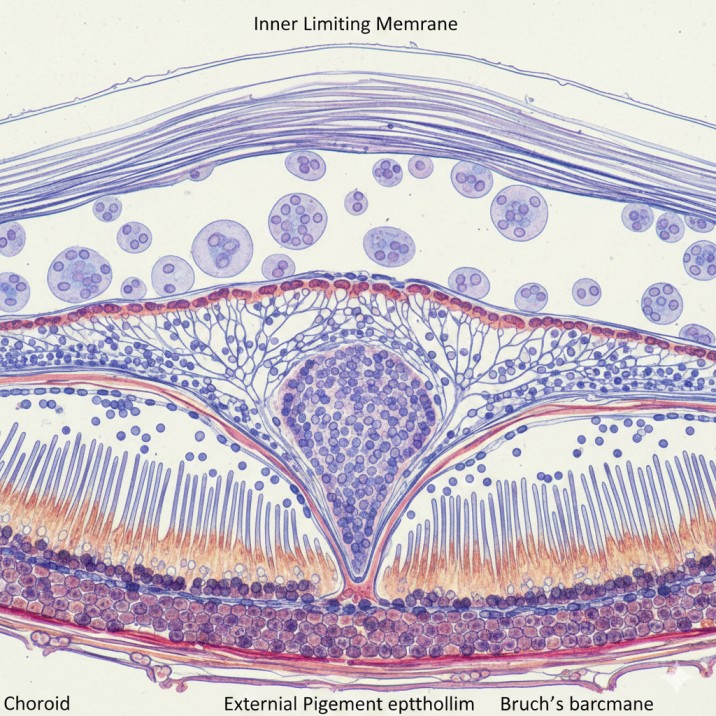
Research by Dr. Mir Alam Siddique (PhD) on standardized database for macular thickness and volume within the North-East Indian population

High-resolution view showing distinct retinal layers and foveal depression.

Why a Regional Database Matters

Macular thickness varies by ethnicity, race, and geography. This study provides the first essential benchmarks specifically for the North-East Indian population, preventing diagnostic errors based on foreign demographics.

Key Research Findings

Metric Right Eye (Mean) Left Eye (Mean)
Macular Thickness 264.93 ± 24.44 µm 266.76 ± 23.42 µm
Macular Cube Volume 9.54 ± 0.91 mm³ 9.69 ± 0.76 mm³

The Gender Factor

Males consistently showed greater macular thickness (273.12 µm) compared to females (254.35 µm). Linear regression confirmed age has no significant association with thickness in this demographic.

Patient & Clinical FAQ

Why is a specific database for North-East Indians important for my diagnosis?+

Macular thickness varies significantly based on ethnicity and geography. Before this study, doctors often had to rely on global or Western databases. By using a normative database specific to the North-East Indian population, we can more accurately distinguish between a healthy eye and early-stage diseases, reducing the risk of a "false positive" diagnosis.

Is it normal for men and women to have different OCT results?+

Yes. Dr. Siddique’s research confirmed a statistically significant difference (P < 0.001) between genders. Males typically have thicker macular measurements and higher volumes than females. Lensmaster Guwahati uses these gender-specific benchmarks to ensure your eye health is evaluated against the correct standard.

Does my age affect what my "normal" macular thickness should be? +

Interestingly, this study found that age has no significant association with macular thickness in healthy individuals within this population (21–70 years). This is reassuring for patients, as it means that any significant thinning or thickening we detect is more likely linked to eye health rather than just the natural aging process.

Why do I need an OCT scan? +

An OCT scan allows us to see beneath the surface of the retina to detect issues like swelling or thinning that are invisible during a standard eye exam.

Is there a difference between my left and right eye? +

According to this study, healthy eyes show high symmetry. If there is a large difference between your eyes, it helps us identify localized pathology.